
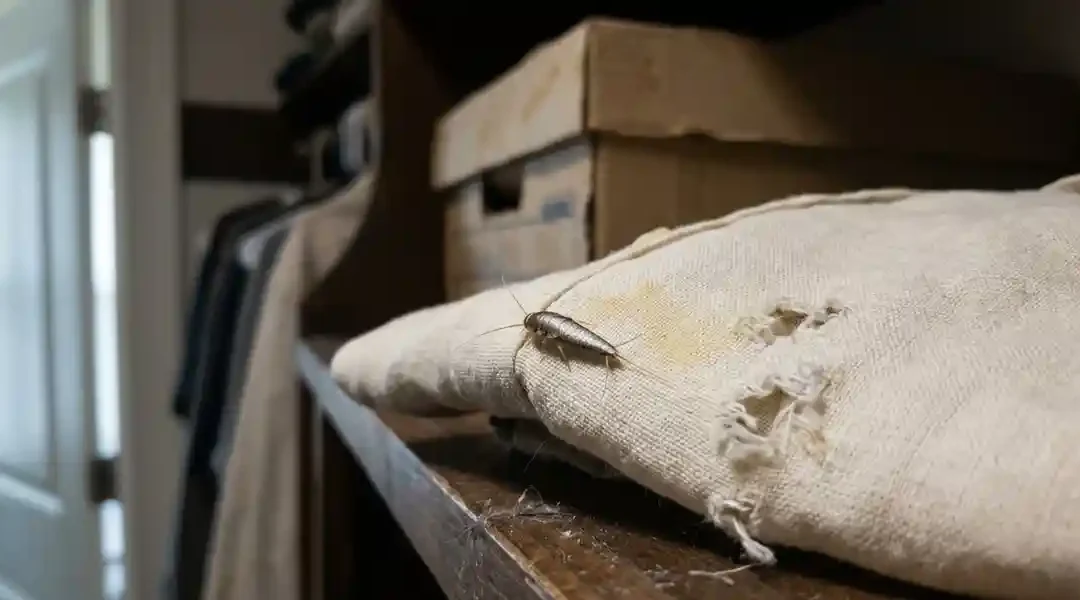
You’re cleaning out your closet when you spot something out of the ordinary toward the back where you rarely go. It’s one of your forgotten favorites, something you haven’t worn in a long while. Taking it out of the closet, you begin to reminisce about the good times and suddenly realize there are tiny, irregular holes all up and down and, even worse, there are also yucky yellow stains! Gross! Worse still is the stale odor, and you can’t tell whether those yellow stains make it stink or if that’s just the result of months and months of neglect. Something has been eating your clothes, and the culprit turns out to be silverfish.
Now, you’re wondering what caused this damage and start to poke around, only to discover these disgusting carrot-shaped, silverish bodies, so you’re snapping a few pictures for an image search. Within seconds, you know what’s invading your closet, and the very next thing you do is search, “How to get rid of silverfish?”
Silverfish Damage
Standing in disbelief in front of your closet, you read the search summary, only to be horrified by what you discover. Sure, you know that termites and carpenter ants can do a lot of damage to a house, but you’ve always thought of silverfish as somewhat benign. Yeah, maybe a little creepy, but not the source of any real damage. As you read on, you quickly learn that silverfish not only chew through clothes, but also feast on books, papers, photos, wallpaper, and a whole host of other things, including fabrics. Unfortunately, that’s not all; there’s a lot more.
What Silverfish Eat
Now that you know silverfish nibble on clothing, wallpaper, photos, paper, and more, it’s not a shock to also learn they’ll eat plenty more. These diet items include cotton, linen, silk, rayon, cardboard boxes, as well as synthetic fabrics. They’ll also consume other insects. So, silverfish will eat dead insects, shed skin, hair, dandruff, and dried meat, along with pet food. Basically, anything that’s paper-like and organic is on the menu, which means silverfish discover an endless smorgasbord when they enter a home. Better yet, from their perspective, there’s a full meal or snack in practically every single room in the house. Now, you’re beginning to understand that your home is a cornucopia of delicious delights for oodles and oodles of silverfish. And here’s what makes the situation even worse. A female silverfish lays about 1 to 3 eggs per day, or small clusters of 2 to 20, for a total of around 100 eggs over her lifespan. Making matters all the more unpleasant, silverfish reproduce year-round indoors because it provides shelter and an ideal breeding environment.
Where Silverfish Hide
If all that isn’t bad enough, there’s even more disturbing information. For instance, silverfish prefer dark and humid spots, and those are more attractive when also warm. If the temperature ranges from 70°F–85°F, silverfish are more likely to be present, and they absolutely love humid environments, especially above 75%, making bathrooms quite attractive. And that’s precisely where people find them: in bathrooms, but also laundry rooms, as well as attics and kitchens. All of these spaces are generally warmer than the rest of the house and more humid. Plus, silverfish usually avoid light, which makes these spots all the better.
So, you’ll find silverfish by drains, behind baseboards, under boxes, inside stacks of paper or newspaper, insulation, behind or under appliances, inside pantries, under sink cabinets, deep within wall cavities, as well as around window frames and baseboards. Basically, anywhere moisture has the ability to accumulate, you’ll find prime spots for silverfish.
Silverfish Infestation Signs
Like some other invaders, silverfish move quietly. Unfortunately, these destructive insects are also nocturnal and move only at night. Plus, their presence isn’t obvious because they leave almost all their evidence indirectly, meaning there are signs, but they’re minor. To determine whether silverfish are present, look for small holes in wallpaper, books, cardboard boxes, documents, and more. You can also check your closet for irregular, tiny holes in your clothes. Besides holes, look for small yellow stains and the waste they leave behind, which appear as tiny black specks. Another telltale sign is translucent shed skins or fine silvery scales. Of course, dead silverfish strewn around is a big indicator.
How to Protect Your Home from Silverfish
To keep silverfish from taking over, cut off what they need: moisture, food, and places to hide. Silverfish move in when a space stays damp, offers scraps they can eat, and gives them dark spots to shelter. Cut those three off, and they have little reason to stay. Use a dehumidifier and increase ventilation in high-moisture spaces, such as bathrooms and laundry rooms. Fix leaks whenever and wherever you find them, and keep exterior drains open, such as gutters. Obviously, you should seal up any entry areas that allow silverfish and other insects to get inside.
Silverfish FAQs
Are silverfish harmful to humans?
Silverfish aren’t dangerous to people. They don’t bite, sting, or spread disease, and they won’t harm pets. The real concern is the damage they do to clothing, books, photos, and stored papers. Their shed skins and scales can also collect in dust and may trigger allergy symptoms in sensitive people.
Do silverfish mean my house is dirty?
No, silverfish don’t mean your house is dirty. They’re drawn to moisture, darkness, and starchy materials, all of which exist in even the cleanest homes. A spotless house with a leaky pipe, a damp bathroom, or boxes of paper in a humid attic can still attract them, especially in a climate like Northeast Florida’s.
What’s the difference between silverfish and firebrats?
Firebrats are close relatives of silverfish with the same carrot-shaped body, but they’re mottled gray-brown instead of silvery. Firebrats prefer much hotter spots, often near water heaters, furnaces, dryers, and ovens. Both pests feed on the same starchy materials and respond to the same moisture-control and sealing steps.
How long do silverfish live?
Silverfish can live for several years, typically two to eight, which makes them one of the longer-living household insects. Unlike many pests, adults keep molting throughout their lives. That long lifespan, combined with steady egg-laying indoors, is why a small silverfish problem can quietly grow into a larger one over time.
Why do I keep finding silverfish in my bathtub or sink?
Silverfish usually end up in tubs and sinks because they wander in looking for moisture and can’t climb back out of smooth, slick surfaces. They aren’t coming up through the drain. Finding them there regularly is a good sign the bathroom is humid enough to support them nearby, often behind baseboards or under the vanity.
Are silverfish common in Jacksonville homes?
Yes, silverfish are common in Jacksonville and across North Florida. The area’s warm temperatures and high humidity create the damp, sheltered conditions they need for most of the year. Attics, garages, bathrooms, and laundry rooms are frequent trouble spots, especially in homes with poor ventilation or recurring leaks.
When should I call a professional for silverfish?
Call a professional if you keep seeing silverfish after drying out damp areas and clearing clutter, or if you’re finding new damage to clothes, books, or stored items. A pest control technician can locate hidden harborage areas, treat wall voids and attics, and recommend moisture fixes that keep silverfish from returning.