
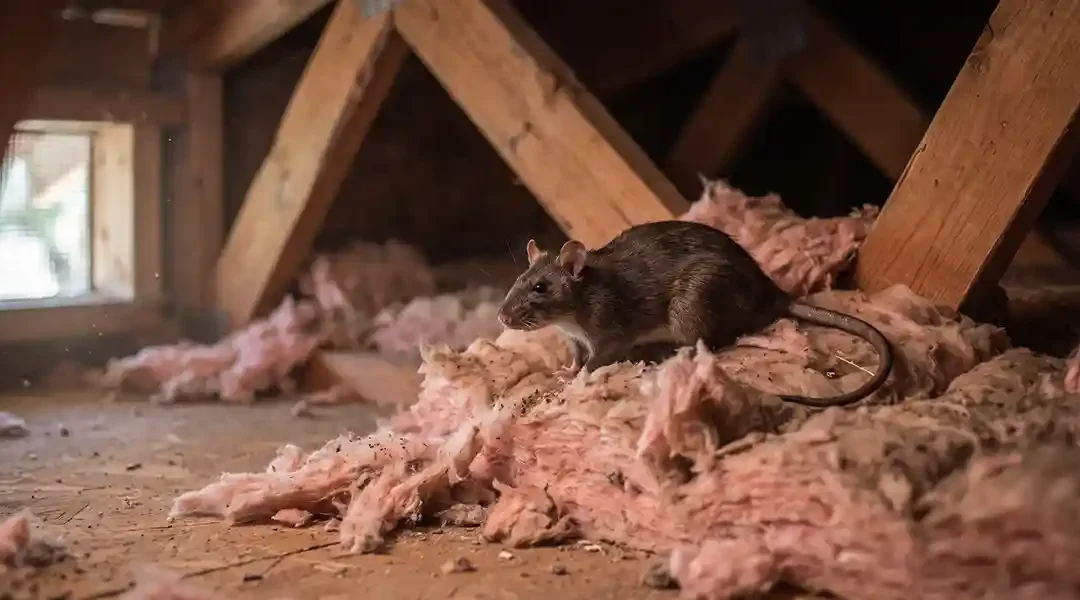
Rats are disturbing, disgusting, and dirty creatures. While they do serve a role in the food chain and in every local ecosystem, they can cause significant damage and harm. For instance, rats can virtually destroy a residential space, and what’s worse is that they are disease transmission vectors. That means possible exposure to Leptospirosis, Salmonella, Hantavirus, and rat-bite fever, just to name a few.
Furthermore, rats are everywhere due to their rapid reproductive rate. Just one female can birth litters of 6 to 12, and as many as 14 to 20 barbaric babies. In fact, a single female can produce 5 to 7 litters annually, potentially adding 30 to 80+ to the overall population. What’s more, rats are so pervasive in Jacksonville that the city ranks as one of the most infested in the entire country. So, it’s no surprise rats are a real problem.
Why Rats Get into Jacksonville Homes
It’s certainly no secret that Florida is steeped in a warm and dense climate. Compounding the problem are older residential areas, which unwittingly provide ideal conditions for roof rats to thrive. These rodents frequently invade homes, especially in late summer and early fall, to escape extreme heat and storms, often taking up residence in attics, ceilings, and wall voids.
Rats infiltrate houses because these residences provide everything they need. And what do rats need? Well, just like humans, rats need food, water, and shelter. Unfortunately, your home provides all three in abundance, essentially in a never-ending supply. Attics are ideal because they provide shelter from the elements, plenty of space to move around, no shortage of things to gnaw on, and a steady water supply within easy reach.
Common Access Points Rats Use to Infiltrate Attics
Now, just how do rats get into attics? After all, they can’t fly. However, they can climb and climb very well. Because of their climbing prowess, rats can scamper up exterior walls and walk into attics.
But wait! What about those screens and other shields? Don’t those things keep rats out of attics? Well, ideally, yes. However, rats are persistent and can find other ways into attics. For instance, through gaps in the soffits and the roof. Rats often enter through damaged or open vents, gaps in the roofline, or through the eaves. Then, there are tree branches. That’s right. Tree branches are a direct bridge from the ground, up the trunk, over the limbs, and right into the attic.
Key Signs Roof Rats are Actually Inside Your Jacksonville Home
Even if your home is “sealed” or shut up “tight as a drum,” there are still likely areas for rats to exploit to get inside, whether that’s the attic or elsewhere. Because, here’s the thing—rats aren’t picky. Fortunately, they don’t reside inside a home in total silence. Rodents of all shapes and sizes do make their presence known through various ways, which include the following telltale signs:
- Strange nighttime noises. Rats are nocturnal, so once the sun goes down, expect to hear scratching, scurrying, and squeaking coming from your ceiling or walls. If it sounds like something’s throwing a party up there after dark, they’re probably the unwanted guests.
- Droppings dotting the floors. Look for dark, spindle-shaped pellets about 1/2 inch (12 mm) long. They cluster near nesting spots—corners, along rafters, and hidden edges.
- Gross grease marks. Rats follow the same highways every night and leave behind dark, oily smudges on beams, pipes, and walls from the grease on their fur. These rub marks are a dead giveaway.
- Gnarly gnawed wires and wood. Their teeth never stop growing, so they chew constantly. You’ll find chewed wood, PVC pipes, and—worst of all—electrical wiring. That last one is a serious fire hazard.
- Downright damaged insulation. They rip apart insulation to build nests, leaving behind piles of shredded material. If your attic insulation looks like it went through a blender, rats did it.
Then, there are those strong odors. If you smell a heavy, musky smell in the attic (especially in tight, enclosed spots), it is a classic sign they’ve set up camp. Catch these signs early, and you can deal with them before they turn into a full-blown infestation. If you don’t act right away, they’ll keep on multiplying and destroying whatever they come into contact with. The good news is, there is a solution. Trad’s Pest Control is your go-to source for getting rid of rats and many other pests.