
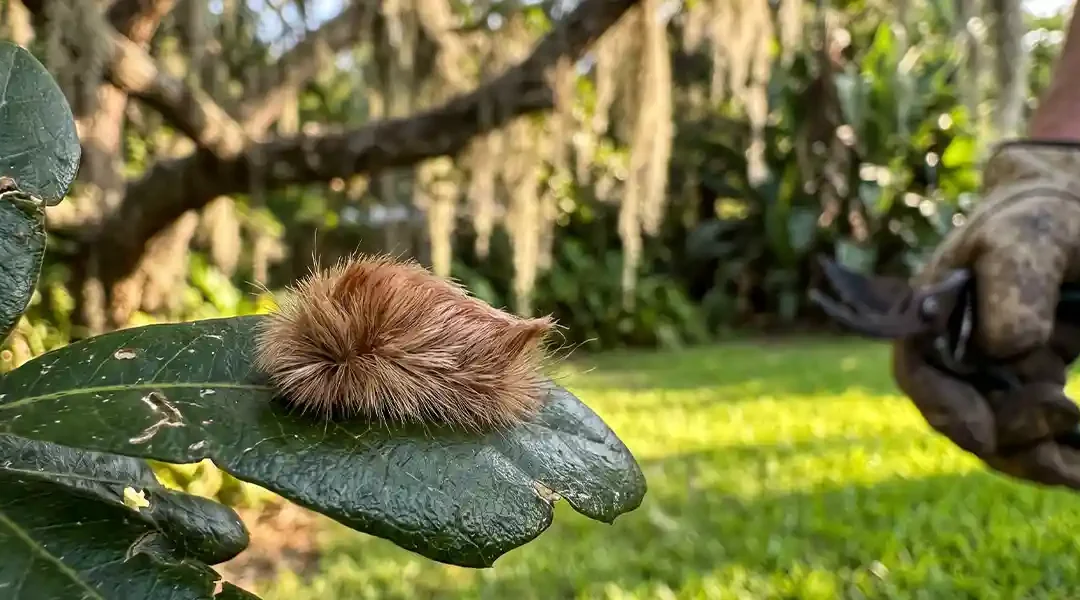
Picture this. You’re outside, doing a little light yardwork on a pleasant afternoon. Everything is going fine as you clean up this and that, carefully crafting a curated look. Then, you spot something out of the ordinary. It’s a fuzzy, innocent-looking creature crawling along a plant. In fact, it looks kind of cute, similar to those bushy caterpillars you’ve seen before. Curious, you get a closer look and don’t see a single thing that makes you think this is a dangerous critter. Its cat-like hair is just furry enough to make you believe it’s totally harmless. So, you slowly reach out to touch it to see just how soft it is. And that’s when it happens. The next thing you know, you’re in pain, and it’s radiating. Very soon after, that painful spot starts to get red and begins to swell and itch. Ugh! You’re now the unwitting victim of the little-known puss caterpillar sting! Yikes!
Puss Caterpillars and Similar Stinging Insects
Don’t let its harmless, fluffy appearance fool you—the puss caterpillar, or the Megalopyge opercularis, is among the most venomous in North America, armed with sharp spines hidden beneath its coat. Yes, they look completely harmless, and that’s how people get stung. However, the puss caterpillar isn’t the only one that stings—there are more. To tell them apart, let’s identify them first. The puss caterpillar has a teardrop shaped body and is covered in long, silky, gray, tan, or reddish-brown hairs. This is known as their “toxic toupee,” which cleverly disguises them and makes them appear like they don’t pose a danger.
Another stinging caterpillar you may find in North Florida is the Io moth caterpillar, which is lime green and sports stripes, along with clusters of bright, horn-like stinging spines. The saddleback caterpillar is stout, brown, and green. It features a striking, bright green “saddle” pattern that defines its back, centered by a brown oval spot, and is armed with intimidating, horn-like spines. Another two are the buck moth and hag moth caterpillar. The buck has a dark body protected by clusters of spines, while the hag is quite bizarre, with an appearance that resembles a withered leaf or tuft of twisted, hair-bearing lateral lobes rather than a traditional caterpillar.
Common Symptoms Sting Victims Experience from the Puss Caterpillar and Others
If you’re stung by one of these innocent-looking critters, chances are excellent you’ll be taken totally by surprise, because their soft appearance is so very deceiving. But it will do far more than startle you. Victims can expect to suffer from a sudden and severe radiating pain. Sting victims also usually experience other symptoms such as swelling, along with redness, itching, and localized blistering. There are also grid-like red patterns that appear where the stingers or spines made contact with the skin.
Unfortunately, that’s not all. The sting of a puss caterpillar may also set off more symptoms, and some very unpleasant ones, as well. Victims might likewise experience significant to severe throbbing pain that radiates through their entire affected limb. Of course, with such a powerful sting, this is quite common. But victims could also experience even more symptoms, which include, but are not limited to: nausea, vomiting, headache, fever, muscle spasms, and swollen lymph nodes.
When to Seek Emergency Medical Attention
If you or someone else is experiencing these or other symptoms, including difficulty breathing, tightness in the chest, low blood pressure, and wheezing, these are serious warning signs. Other alarming signs include swelling in the lips, tongue, face, or throat. Of course, dizziness, confusion, and loss of consciousness are serious symptoms that require immediate medical attention.
What’s more, if you were stung in a sensitive area, such as the eyes or mouth, or your blistering worsens, or there’s an appearance of an infection, you need to seek medical help right away.
Immediate First Aid Applications
If you’re stung by a puss caterpillar or other stinging caterpillar, do not crush or squish the insect against your skin if it’s still in contact with your body. Instead, stay calm and use a stick to remove it. (You can also put on heavy gloves and remove it with the gloves, or use tweezers.)
Now, here’s the unpleasant part. You should carefully remove the venom spines if they’re still stuck in your skin. Use adhesive tape, such as cellophane tape, duct tape, or packing tape. Stick it to the sting site, then peel the tape off slowly and gently. You may need to repeat this process until you remove all spines or stingers.
Next, you can clean the area with mild soap and lukewarm or warm water. This will clear away any leftover surface venom. Apply an ice pack and wrap it in a cloth to reduce the pain, throbbing, and swelling. You can also apply a paste of baking soda and water, calamine lotion, or over-the-counter hydrocortisone cream to ease localized itching and burning. If you experience itching and hives, take an antihistamine, but speak to your doctor or see a medical professional before you do this to ensure it’s safe. See a physician as soon as possible to evaluate your condition and provide proper treatment.
Puss Caterpillar Sting FAQs
When are puss caterpillars most active in Florida?
Puss caterpillars in Florida usually show up in two waves: late spring into early summer, and again in fall. The fall generation is often the one people notice most in North Florida, because it overlaps with yard cleanup season when homeowners are trimming shrubs, raking leaves, and working close to the plants these caterpillars feed on.
What trees and plants do puss caterpillars live on?
Puss caterpillars commonly feed on oak, elm, maple, sycamore, and citrus trees, as well as many ornamental shrubs used in Jacksonville landscaping. You’ll often find them on the undersides of leaves, on branches, or crawling on fences, walls, and outdoor furniture near these plants, which is why gloves are a smart choice for yardwork.
Can a puss caterpillar sting you through clothing?
Yes, a puss caterpillar can sting through thin clothing. Its venomous spines are sharp enough to pierce light fabric, and stings often happen when a caterpillar drops from a tree onto a shirt or gets trapped against skin under a sleeve. Heavy work gloves and long, thicker clothing offer much better protection during outdoor work.
Are puss caterpillars dangerous to dogs and cats?
Puss caterpillars can be dangerous to dogs and cats, especially curious pets that sniff, paw at, or mouth them. A sting to the mouth or face can cause drooling, swelling, pawing at the face, vomiting, and obvious pain. If you suspect your pet has been stung, call your veterinarian right away rather than trying home remedies.
How long does a puss caterpillar sting last?
The intense pain from a puss caterpillar sting usually peaks quickly and begins to ease within several hours to a day. However, redness, swelling, itching, and the grid-like rash can linger for several days. If symptoms worsen instead of improving, or signs of infection appear, check in with a doctor for an evaluation.
What does a puss caterpillar turn into?
A puss caterpillar turns into the southern flannel moth, a small, fuzzy moth with yellowish-orange to cream-colored wings and furry legs. Unlike the caterpillar, the adult moth does not have venomous spines and isn’t considered dangerous. The caterpillar spins a tough cocoon on branches or structures before emerging as a moth.
How do you get rid of stinging caterpillars in your yard?
To get rid of stinging caterpillars in your yard, wear heavy gloves and remove them with a stick or tool, then prune heavily infested branches. Never handle them barehanded. For larger infestations on trees and shrubs near your home, a local pest control or lawn care professional can recommend safe, targeted treatment options.