
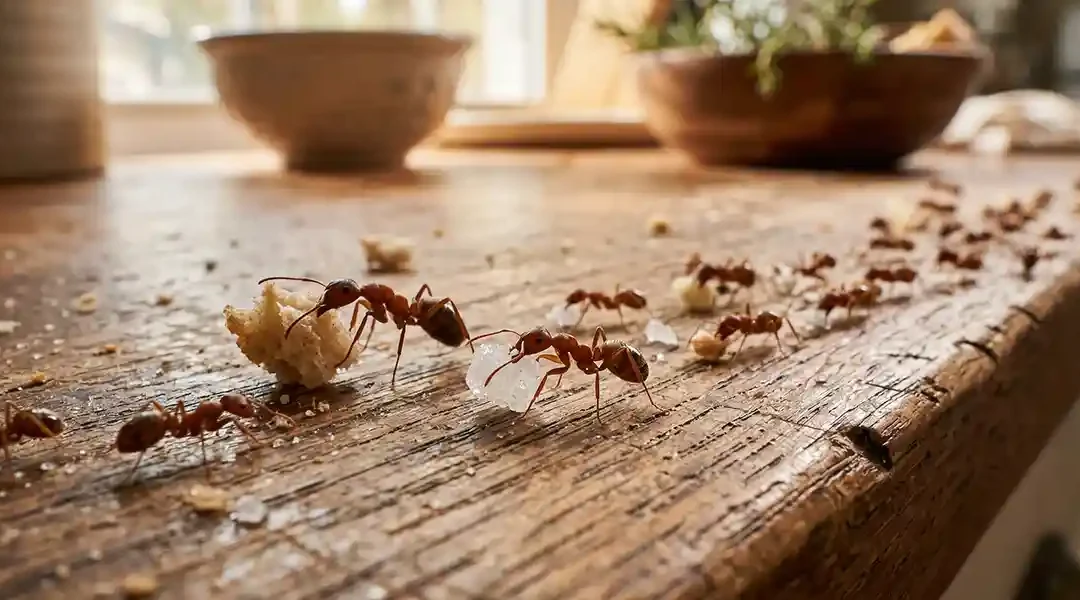
Ants are among the most common and persistent pests in Jacksonville homes and businesses. Understanding what ants eat is crucial for effective pest control and prevention. While it may seem like ants will devour anything in their path, their diets are more varied and specialized than most people realize.
In the information that follows, we’ll explore the dietary habits of ants, with a focus on the species commonly found in Northeast Florida, and offer insights into why your kitchen or yard might be so attractive to these tiny invaders.
Ants Are Omnivores
Ants are omnivores, meaning they eat both plant and animal matter. Their ability to consume a wide variety of foods is a key reason why they thrive in so many environments, from forest floors to urban kitchens. Ants use their powerful mandibles to break down food and rely on chemosenses—tiny hairs on their bodies that detect chemical signals—to locate meals.
What Do Ants Eat?
Sugars and Sweets
Sugary foods are a primary energy source for most ant species. In the wild, ants are drawn to nectar from flowers and the sweet honeydew produced by aphids and other plant-sucking insects. In homes, they are attracted to:
- Spilled soda, juice, and sugary drinks
- Fruits like strawberries, bananas, and melons
- Candy, honey, syrup, and jams
Even small spills or crumbs can attract a trail of ants, as their chemosenses allow them to detect sugar from surprisingly far away—sometimes up to 100 yards.
Proteins and Fats
While adult worker ants primarily seek out carbohydrates for energy, protein is essential for the growth and development of the colony’s larvae. Sources of protein and fat include:
- Dead insects and other small animals
- Meat scraps, eggs, and greasy foods
- Seeds and nuts
Some ants, like thief ants and fire ants, have a particular preference for meats, fats, and greasy substances. In nature, ants may scavenge from dead animals or hunt other insects, while indoors, they often target pet food or kitchen scraps.
Fungus and Plant Material
Certain ant species have unique dietary habits. For example, leafcutter ants don’t actually eat leaves; instead, they use chewed-up leaves to cultivate fungus, which serves as their primary food source. Harvester ants, on the other hand, collect seeds and grains, storing them in their nests for future use.
Water
Like all living creatures, ants need water to survive. They often obtain moisture from the foods they consume, but will also drink from water sources when available, including leaky pipes, pet bowls, or condensation on windows.
How Ants Find and Share Food
Ant colonies are highly organized. Worker ants leave the nest to forage, using their chemosenses to locate food. When a food source is found, they lay down a pheromone trail, guiding other ants to the bounty. Ants have two stomachs: one for their own nourishment and another to store food for sharing with the colony through a process called trophallaxis.
Dietary Preferences of Common Jacksonville Ants
Jacksonville is home to several ant species, each with its own dietary quirks:
- Carpenter ants: Prefer sweet foods like honeydew and protein-rich insects, but do not eat wood—they only tunnel through it for nesting.
- Argentine ants: Extremely adaptable, will eat almost anything edible, making them tough to control.
- Fire ants: Aggressive omnivores that consume a wide range of foods, from sweets to other insects and small animals.
- Sugar ants and odorous house ants: Drawn to sugary substances, making kitchens and pantries prime targets.
Why Ants Invade Homes
Ants enter homes in search of food, water, and shelter. Kitchens, pantries, and garbage bins provide easy access to their preferred meals. Even a minor spill or a forgotten crumb can trigger a full-scale invasion. Outdoor factors, such as drought or heavy rain, can also drive ants indoors as they search for sustenance and stable conditions.
Tips for Ant Prevention
- Keep surfaces clean. Wipe up spills and crumbs promptly, especially sugary or greasy substances.
- Store food securely. Use airtight containers for pantry items and pet food.
- Take out the trash regularly. Don’t let garbage accumulate indoors.
- Fix leaks. Eliminate standing water and repair dripping faucets.
- Seal entry points. Caulk cracks and crevices around doors, windows, and foundations.
What To Know
Ants are resourceful and adaptable eaters, capable of thriving on a wide variety of foods. Their love for sugars, proteins, and fats makes human homes especially attractive.
By understanding what ants eat and why they invade, Jacksonville residents can take proactive steps to keep these persistent pests at bay.