
Ants are a common pest concern, especially in warm, humid environments like Jacksonville, Florida. While most people notice worker ants marching across countertops or swarming near food, the real foundation of an ant colony lies hidden beneath the surface—in their eggs. Understanding ants’ eggs and their role in colony development can help homeowners and businesses take effective steps to prevent infestations.
What Are Ants’ Eggs?
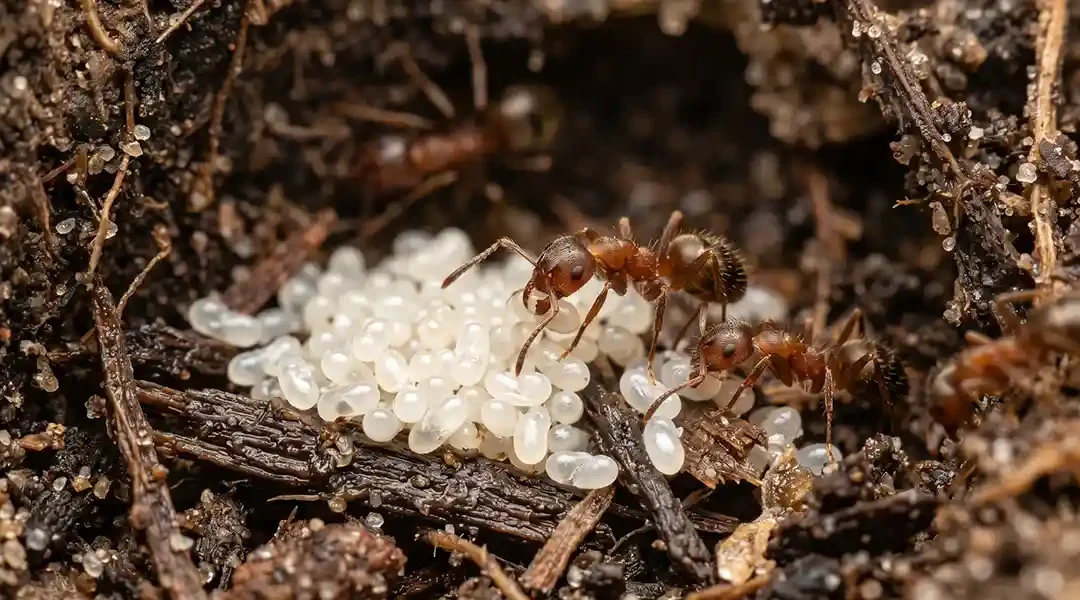
Ants’ eggs are tiny, oval-shaped structures that serve as the first stage of an ant’s life cycle. Depending on the species, these eggs can be translucent or white, often resembling minuscule grains of rice. They are typically laid by the queen, the sole reproductive member of the colony, who can produce thousands of eggs over her lifetime.
The Ant Life Cycle
Ants undergo complete metamorphosis, meaning they develop through distinct stages:
- Egg: The starting point of an ant’s life, taking anywhere from a few days to two weeks to hatch.
- Larva: Once hatched, the larvae resemble tiny, worm-like creatures. They are entirely dependent on worker ants for food.
- Pupa: After growing for several weeks, larvae enter the pupal stage, where they develop into adult ants.
- Adult ant: Fully formed worker ants emerge and begin their assigned tasks—gathering food, expanding the nest, and caring for the next generation.
Understanding this life cycle helps pest control professionals and homeowners disrupt infestations before colonies grow too large to manage.
Where Are Ants’ Eggs Found?
Ants strategically hide their eggs in protected areas to ensure survival. Common nesting locations include:
- Soil. Many ant species build subterranean nests where they store eggs safely.
- Inside walls. Some ants, like carpenter ants, create nesting sites in wooden structures, posing structural risks to homes.
- Under floors or cabinets. Moisture and food sources attract ants to indoor spaces, where they may lay eggs near plumbing or in cracks and crevices.
- Near food sources. Some ant colonies build nests close to their food supply, such as inside pantries, garbage areas, or pet feeding stations.
Why Do Ant Infestations Happen?
Ant infestations typically occur due to three main factors:
- Accessible food. Ants are drawn to sugary substances, proteins, and crumbs left around a home or business.
- Moisture. Excess moisture from leaks, condensation, or humid conditions can attract ants to a property.
- Shelter and nesting opportunities. Cracks, gaps, and deteriorating wood provide ants with ideal nesting spots.
Preventing Ant Infestations
To reduce the risk of infestations and the spread of eggs, consider the following preventative measures:
- Keep your home clean. Regularly wipe down surfaces, sweep floors, and store food in airtight containers.
- Seal up entry points. Identify gaps around windows, doors, and walls and apply caulking or weather stripping.
- Address any moisture issues. Fix leaks, improve ventilation, and reduce excess humidity indoors.
- Use targeted pest control solutions. Professional pest control services, such as those offered by Trad’s Pest Control, provide tailored solutions to eliminate ants at their source, including treating nests and preventing future egg-laying cycles.
Professional Pest Control for Ant Infestations
If ants have already settled in and their eggs are hatching rapidly, professional pest control is the best solution. Pest control experts use safe, strategic treatments to eliminate colonies while preventing reinfestation.
Trad’s Pest Control in Jacksonville specializes in identifying ant species, locating nests, and implementing eco-friendly solutions to remove ants effectively. With a proactive approach, residents and business owners can ensure their properties remain ant-free, minimizing the health and structural risks associated with infestations.
Remember This
Ant infestations begin long before adult ants become visible—they start at the egg stage. By understanding where ants lay their eggs, how their colonies develop, and what attracts them to homes and businesses, property owners can take action to prevent infestations. For comprehensive and long-lasting solutions, professional pest control services like Trad’s Pest Control offer the expertise needed to protect homes and businesses from ants and other invasive pests.